
Symposium Introduction
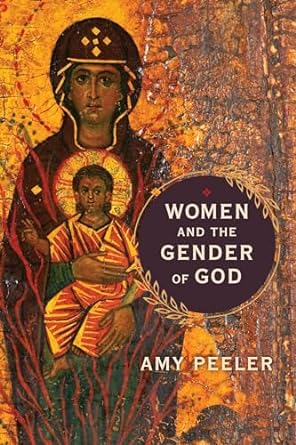
God values women. Amy Peeler’s recent work, Women and the Gender of God, begins with this seemingly inarguable claim. And yet, she points out, if we examine the historical experience and treatment of women both within Christianity and without, we find this claim in need of further validation. Many scholars have assessed this belief both positively and negatively from various historical and ecclesiological perspectives, but Peeler’s work of robust constructive theology takes as its starting point an unconventional yet incontrovertible assertion: God is not male.
Though orthodox Christianity has always maintained that God is beyond gender, Peeler argues that the long history of the church’s doctrines and actions suggest a cognitive dissonance in which “the affirmation of God’s maleness has always existed alongside its denial” (3). The challenge Peeler faces is finding harmony between God’s nonmale, beyond-gender nature, with the equally orthodox understanding of God as Father and Son. In Women and the Gender of God, Peeler looks at the incarnation as both the challenge and the solution to the issue of God’s nonmaleness as well as God’s value for women; these central claims find critical support in the role of Mary as theotokos. Predicated largely on Mary’s willing contribution of flesh to the human-divine project of incarnation, Peeler asserts that God the Father is not male and God the Son is male like no other.
Women and the Gender of God makes this argument over the course of six chapters that examine in turn the sex, gender, and roles of God and Mary. Chapter 1 demonstrates that there is no male presence or sexualized language indicated in the birth narratives of Jesus, suggesting that God the Father is not male. Chapter 2 examines conceptions of female bodies and purity laws, concluding that the coming of the Son through Mary’s female body and her subsequent nurturing and mothering is a radical display of the holiness of female bodies and motherhood, sufficiently sacred to grow, birth, touch, and hold Divinity embodied.
Chapters 3 and 4 look at gendered stereotypes of femininity and masculinity against an argument frequently articulated and often underlying for Mary’s receptivity and passivity in contrast to God’s initiation and sovereignty as a display of proper gender roles and expressions. Peeler’s exegesis of the annunciation narratives in chapter 3 concludes that this radically honorific role of theotokos is presented as an invitation, not a mandate, and her agency is not only welcomed and necessary, but blessed. Chapter 4 tackles the theological and philosophical arguments that cast all of humanity as feminine in relation to God based on a confluence of biblical imagery and the concept of femininity as ontologically receptive and, in so doing, crudely sexualize God and equate masculinity with transcendence.
In chapter 5, Peeler substantiates both Jesus’s virgin birth and the manner in which a virginally-born male can represent all of humanity in salvation. In being “a male-embodied Savior with female-provided flesh,” not only can Jesus save all, but does so with a radical inclusivity of both sexes (137). Against the possibility of reducing women’s value to mere maternity, the last chapter explores Mary’s ministry in and beyond motherhood, specifically in the elevation of her voice in both the proclamation of God’s plan and in her ongoing parenting role throughout the Gospel accounts.
As Peeler explores the cognitive dissonance between two orthodox claims—God is not male, yet God is Father and Son—and some of their ecclesiological implications, i.e., whether women can represent God, it should not be surprising that some claims are more novel and potentially provocative, such as Jesus saving through a male-embodied but female-provided flesh, while others are more well-trodden, if not universally accepted, such as Mary’s agency. Women and the Gender of God brings together several threads of conversation in a fresh, constructive, and thoughtful way that sets the stage for further engagement with a question that is becoming ever more critical in our day and age—what does it mean that God is beyond gender and how then does God relate to, and save, gendered men and women?
Our conversation here begins with Emily McGowin asking whether the inclusivity of both sexes in the male-embodied, female-provided flesh is truly necessary. McGowin argues that we ought to be careful to constrain God in salvation freely given but suggests that the theological aesthetic of fittingness aptly applies here. God’s freedom and willingness to include women increases our understanding of God’s value of women: God did not have to do it this way, but He chose to.
Lindsey Hankins continues the conversation by suggesting that Women and the Gender of God would benefit from clearer definitions and distinctions for sex and gender. Peeler implies an understanding of sex as relating to the biological realities of male and female, which is clearly addressed in the first two chapters. Hankins points out that she also implies an understanding of gender as related to the socialized concepts of masculinity and femininity, but while femininity is addressed in chapter 3, the issue of Jesus’ masculinity is not dealt with directly. This, Hankins helpfully points out, could be a place to continue the conversation. She goes on to suggest definitions of sexism and misogyny articulated by Kate Manne as a possible way to define and articulate the cognitive dissonance Peeler sees in the church.
Nijay Gupta takes the conversation down a more speculative path, suggesting and teasing out implications for Peeler’s robust understanding of Mary. Could Jesus have learned about God and Torah from Mary? Was Mary truly a disciple of Jesus? And, if bringing male and female flesh together is fitting for salvation and the Eucharist, why did Jesus have twelve male disciples? Though Gupta asks these questions charitably for the sake of theological inquiry and imagination, they are helpful queries for continuing the conversation regarding the ecclesiological implications Peeler draws out for female bodies presenting the Eucharist in liturgical service.
The last contribution to our conversation brings a psychological approach to Peeler’s work through an interdisciplinary reading by Christin Fort. She notes that our images and concepts of God are largely inherited and products of the people and society around us. Fort argues that because she saw women around her actively engaging with God as she was growing up, she came to the biblical text ready to see God speaking with women, but not all have this inheritance. For this reason, we must actively acknowledge the perspective we bring to reading the text and read the text in community.
This communal reading not only of the biblical text but also of Peeler’s constructive and thoughtful work in Women and the Gender of God has begun an edifying conversation that somehow manages to direct our thoughts both to who God is within His beyond-gendered transcendence, and simultaneously, who we are in our sexed and gendered realities and how we relate to God.
9.17.25 |
Response
On Footnotes and Fatherhood
One of the first lies I was told as a graduate student was that the best scholarship was novel. To be sure, much of it is. And yet there is a strong case to be made for the goodness of theological monotony, of stating the already known again and again. Amy Peeler’s recent monograph, Women and the Gender of God, revolves around longstanding claims as patently obvious to some as they are manifestly ignored by others. Peeler reminds us that while Christianity’s God values women, Christianity itself has struggled to follow suit. For all the church’s orthodox God-talk to the contrary, there remains a lurking suspicion—if not outright attestation—that men are simply more God-like than women.
Peeler disagrees and, thus, her book continues a necessary conversation, one too easily dismissed as otherwise “solved.” Any theologian worth her salt knows that much of what Christians boldly confess are simultaneously settled and contested truisms because while orthodoxy is beautiful, lies are quite sticky. The church has said, it has agreed that God is not male for a very long time. But we have also allowed and at times supported covert catechisms that lead even the youngest among us to think that, somehow, God is more male than female, that God, as one little boy at the end of Peeler’s book puts it, just is “a boy.” Peeler’s book is an important contribution for not only does she refuse to ignore this lie, she also convincingly reminds us of a better story the church already knows but does not always believe.
So far as constructive critiques, I raise two. I hope to do so in the same spirit of generosity and goodwill that Peeler displays on each of her well-researched pages. None of these critiques should militate against the central claims of her text. Instead, I offer them in the sure hopes that when Peeler answers them, her project would be all the stronger.
Perhaps my central critique—or, at the very least, point of confusion—rests on her use and meaning of the terms “sex” and “gender.” There is a footnote1 within the first few pages of the book in which Peeler lets the reader know that she approves of Judith Butler’s “unsettling[ing of] a neat bifurcation between sex and gender” (5–6). Beyond that citation, I do not believe the terms are otherwise defined and they do not show up as searchable subject items in the index list.
Now, I tread carefully here because so often critiques about missing definitions are little more than distractions: instead of attending to the heart of the issue, academics can nit-pick around the edges better than most. I’m aware of that tendency and I do not wish to repeat it here. Instead, I bring these omissions up for two reasons. First, “gender” appears in the monograph’s title and thus signals a central concept which readers can reasonably assume the author will unpack, particularly since both “sex” and “gender” remain especially contested terms. And second, it seems that Peeler’s own incarnational logic presumes and requires a stark distinction between sex and gender due to the centrality of Mary’s virginal conception for her argument. Put differently, having dispensed with various unorthodox notions of divine insemination early on, her crescendo rests in a conclusion that Jesus’s true albeit unique maleness hails from female flesh alone. This essentialist claim, however, reads precisely like the sort of “regulatory fiction” that Butler was so keen to undermine.
Famously, Butler sought constructivist accounts of both sex and gender as more things that we do—repeated “performances”—than natural attributes we have—inherited essences.2 And since those performances are constant, Butler considered identities of all kinds as utterly mutable, forever negotiated and re-negotiated. Thus, gendered identities are, in Butler’s hands, “a complexity whose totality is permanently deferred, never fully what it is in any given juncture in time.”3 This subject, wholly constituted in discourse, is just one example of where these two authors appear to labor under radically different assumptions. Accordingly, I found Peeler’s nod to Butler more confusing than helpful. It left me poised to expect more of the theorist’s assumptions and conclusions than I ended up finding in the remainder of the text. Even more, my fear would be that many within Peeler’s intended audience—those most in need of being reminded that God is not, actually, male—would also expect more of the critical theorist’s fingerprints throughout. Despite the fact that Peeler aims to only scratch the surface of Butler’s most critical conclusions, this is perhaps all that is required for her most wary reader to walk away and miss the nuanced, charitable, and ecumenically-attuned work to come.
Be that as it may—and I’m really not trying to make a mountain out of a molehill—in that same footnote where Peeler references Judith Butler, she ends by saying: “Recognizing that nuance, I have chosen to emphasize the sexual questions involved in the pregnancy first before turning to the character of God and Mary, perceived as masculine and feminine respectively” (n. 10, 5–6). That structural outline—sex first, then gender talk—is reinforced in the Introduction where Peeler states that she’ll deal first with claims of God’s maleness (primarily in the context of His fathering a child) and then on to gender discussions. Here’s how it’s put: “The second [section] broadens beyond bodies to consider the characteristics of those bodies in action—in other words, the gender of God and Mary” (6). Here, I take it, sex talk is primarily bodily, while gender talk is primarily “bodies in action.” I see the same distinction made later when Peeler states that “Many theological branches may deny that God is male, but by insisting that God’s actions are masculine ones they assert that males have an advantage to be more like ‘him’ than females.” Peeler concludes: “God the Father is not male. God the Father is not masculine. The son Jesus is embodied male but, because of the mode of his incarnation, is male like no other, denying the necessity that only males represent him. God the Father is rightly ‘Father’ because God is Father of the eternal Son Jesus the Messiah, whose mother was Mary of Nazareth” (188).
From this it is clear that God the Father is neither male nor masculine. It is also clear that Jesus is male. What is not clear, however, is whether Jesus is—or could be—masculine. To put it as a question, if Jesus is male like no other, is he also masculine like no other? And if so, what would that look like?4 But, of course, even if that were possible (viz., that Jesus is masculine like no other), the meaning behind the distinction would come to the fore only if sex and gender were more cleanly teased apart, each given more definition. This is all to say that it appears sex and gender are more cleanly distinct than Peeler’s early footnote would have first led me to believe, and if that’s true, then all the more impetus to offer a fuller account of what one is over and against the other.
With that pushback, I’d also like to offer a suggestion, perhaps, for how to tease the terms apart. Kate Manne is a philosopher at Cornell University and has done quite a bit to move the conversation on misogyny forward by, in large part, refusing to let its use fall into disrepair. Her Down Girl argues that we have to stop viewing misogyny in primarily psychological terms, as a hateful notional position where women are hated as women. In this schema, it’s hard to marshal the charge against someone save for some explicit manifesto or confession as hard evidence. This, she tells us, is “naïve,” for it “makes misogyny a virtually nonexistent and politically marginal phenomenon, as well as an inscrutable one.”5 Instead of this psychologizing tendency, Manne advocates we set misogyny in social function: “Misogyny is then what misogyny does . . .”6 One of the things I find most helpful about this reconstruction of the term is that it helps us parse sexism from misogyny. The former is “the branch of the patriarchal ideology that justifies and rationalizes a patriarchal social order, and misogyny as the system that polices and enforces its governing norms and expectations. So sexism is scientific; misogyny is moralistic.”7
With Kate Manne’s help, then, we can say the following: what Peeler has done an exemplary job of highlighting is how it’s entirely possible that the church can, on one hand, avoid sexist God-talk by declaring that God is not male and yet fall deeply into the misogyny of gendered God talk, the kind that “polices and enforces” the disavowed but not declawed sexist norms and expectations embedded within Christianity. Even more, we’re also licensed to say that no matter our intent, whenever Christians soften, excuse or flat ignore sexist theology in any of its guises, we can still be complicit in that same patriarchal matrix and the misogyny that continues to govern and enforce it. Otherwise upstanding Christians don’t have to hate women to be misogynists. They simply need to find effective ways to say, Down girl. Here’s the problem, however: if sex and gender are so closely entangled, then who are those most likely to be kept down? If it is women as such (however we define this), then we need some conceptual apparatus that allows us to disentangle sex from gender, right? Surely all people—male and female—suffer when God is presented as male, as especially manly. Even so, they are injured in characteristic ways, ways that map onto the uniqueness of their body and its performances.
My final critical engagement centers around Peeler’s take on eternal generation. The following is a central quote: “If speaking of the paternal God finds no justification from God’s relationship with creation or from eternal generation, then the reasons must lie in Jesus’s decision to speak in this way” (114; emphasis mine). As I read her in context, Peeler is repeating a previously argued first-order claim that “God does not create like men conceive.” God does not need an ontological other and does not create out of God’s own essence or being (unlike how human men and women contribute matter in procreative sex). Peeler’s claim is that a proper theology of creation, then, precludes flat-footed arguments for God as Father if by that we mean God fathers creation just as human fathers “create” in generative sex. With respect to the eternal generation of the Son, Peeler is rehearsing a longstanding claim that it is good to follow Christ’s lead. In this case, one of the strongest arguments for calling one of the divine persons “Father” is simply that Jesus himself did. In this case, “‘Father’ is a name and not an adjective” (113). Also in context, I read this as yet another example of Peeler pushing back against anthropomorphizing tendencies which too closely relate the Father of Jesus Christ with human men who father.
That is all fine and good. But Peeler’s remark that “speaking of the paternal God finds no justification . . . from eternal generation” strikes me as an undue overstatement. It seems to me that a stronger case could—perhaps should—have been made for an equally longstanding tradition (famously hailing from the Cappadocians) which argues that we can and should call one of the divine persons “Father” for his logical priority within the divine life. Put differently, when speaking of God we can do so under any number of categories. We could talk, for example, about the personal properties of the divine Persons. According to Basil, if we spoke in this register, we would speak of “Father” for he is ingenerate, deriving his hypostasis from no other cause, and of “Son” for he is begotten by the Father eternally, and “Holy Spirit” as the One who proceeds from the Father.8 This unique personal attribute cannot be confused with the shared natural attributes of the one God. This helpful distinction left us with the triune shorthand that the “unity shared is not of person, but of essence.” This is all to say that while “Father” is certainly a name that Jesus invokes, it can also be an adjective if carefully annexed to one Person of the Trinity, given we do not forget that God, in essence, is not pure Father.
These two critical contributions notwithstanding, this is a marvelous contribution for which Amy Peeler should be proud and for which the church should be grateful. It is one of those rare gems that achieves technical depth through accessible prose. Above all, it pursues and promotes a much-needed corrective for those too prone to view God as a “boy” and, thus, women as second-class or derivative image-bearers. Although this claim is far from novel, it is still something the church sadly—and sorely—needs to hear.
The full footnote: “Judith Butler’s work has—beneficially in my opinion—unsettled a neat bifurcation between sex and gender. See discussion in Benjamin H. Dunning, ‘The New Testament and Early Christian Literature,’ in The Oxford Handbook of New Testament, Gender, and Sexuality, ed. Benjamin H. Dunning (Oxford: Oxford University Press, 2019), 5–7. Recognizing that nuance, I have chosen to emphasize the sexual questions involved in the pregnancy first before turning to the character of God and Mary, perceived as masculine and feminine respectively” (n. 10, 5–6).↩
Butler does claim in Gender Trouble (first published in 1990) and in subsequent work, that in this performance one by no means simply tries on whatever gendered identity works best for the day. In her words, “This is not to say that any and all gendered possibilities are open, but that the boundaries of analysis suggest the limits of a discursively conditioned experience” (Gender Trouble: Feminism and the Subversion of Identity [New York: Routledge, 2008], 12). In later writings she derides misreadings of Gender Trouble, those that heard her saying “that I thought that one woke in the morning, perused the closet or some more open space for the gender of choice, donned that gender for the day, and then restored the garment to its place at night” (Judith Butler, Bodies that Matter: On the Discursive Limits of “Sex” [London: Routledge, 2011], ix).↩
Gender Trouble, 22. Sarah Coakley was one of Butler’s defenders against charges of linguistic monism. She saw Butler arguing that “it is gender that is performed, not the material bodies themselves. Language cannot create bodies . . . rather, Butler is insisting that there is no access to bodies that is not already a gendered access” (Sarah Coakley, Powers and Submissions: Spirituality, Philosophy, and Gender, Challenges in Contemporary Theology [Oxford: Blackwell Publishing, 2002], 160).↩
It seems that Peeler does have some notions of what constitutes masculinity and femininity at least insofar as she claims that “God does exhibit both masculine and feminine characteristics” (112).↩
Kate Manne, Down Girl: The Logic of Misogyny (Oxford: Oxford University Press, 2018), 19.↩
Down Girl, 20; emphasis original.↩
Down Girl, 20.↩
St. Basil the Great, Letter XXXVIII, in Nicene and Post-Nicene Fathers, Second Series, vol. 8 (Grand Rapids: Eerdmans, 1994), 138–39.↩
9.22.25 |
Response
There’s Something About Mary
In February 2022, I learned about Amy’s new book, Women and the Gender of God; I was very excited about it, because I had just turned in my manuscript for my book Tell Her Story, about women leaders in the early church. Amy kindly reached out to me shortly after and asked me to read and endorse her book—as Paul would say, something I was already eager to do! Not only did I consume the book quickly, with numerous underlinings and marginal note scribbles, but I immediately decided my students just had to read it. I was scheduled to teach a course called Women and the New Testament; my course started in September, but the book was not due out until October. Never mind that, I put on the syllabus: “preorder this book, and then read it as soon as you get it.” On top of that, I invited Amy to visit my class via Zoom and share about the book. She was gracious enough to do so and my students commented that the class session with her was one of their favorite moments in the class.
But what is the book about? Here is one of the key ideas of the book: God is not a man. This is not simply an esoteric academic matter about a divine being; for Christians it affects how one looks at God, but also how Christians understand human beings made in the image of God, and the nature of all of creation for that matter. Amy considers the portrayal of God in the Hebrew Scriptures, but there is rightly a special focus on the incarnation and the implications of the Word becoming flesh and pitching a tent in the form of a man. This book notes that it is often underappreciated that the Bible uses both feminine and masculine anthropomorphic language for God, but Amy admits, “nonmale additions do not make the male-coded terms any less male” (17). But in Scripture there is a redemptive dynamic at work; while God is Father, God is not to be compared to the behavior of human fathers. Again from a Christian perspective, God’s “Fatherness” is most important in God’s relationship to the Son, Jesus Christ. Amy points out, quite insightfully, that when Mary becomes pregnant, God the Father did not do what so many Greek and Roman gods did in myth and legend; he did not use the male organ to penetrate her. The Spirit overshadows her and she becomes pregnant without direct . . . So, Amy writes in a striking statement: “In the virginal conception, God causes the birth of a son, even provides what a male normally supplies in a nonsexualized divine, and even triune way. As revealed by the narratives of the incarnation, God the Father is not male” (26). I feel like this is Amy’s Here I stand, I can do no other!
Second, Amy looks at the interaction between the all-powerful God and the young maiden Mary of Nazareth. She rejects and refutes the view that Mary was manipulated or coerced into participating in the incarnation. On the contrary, she partners with God, she has agency and she is invited into service and participation. We will come back to Mary in a moment. My favorite part of the book, where I was most struck by ideas I had never thought about before, is Amy’s engagement with the ongoing theological discussions about the uniqueness of Jesus having an earthly mother (Mary), but no earthly father. We simply don’t know how to imagine this biologically, that is genetically, but there is a repeated statement in Amy’s book that left a mark on me, Jesus came into the flesh as a man . . . born of a woman. The implications are massive: “Jesus, the son of Mary,” Amy writes, “radically includes females and males in his imago Dei body. The body that embraces male and female is the same body that reveals God. God the Father is indeed beyond gender, and this is revealed with striking clarity in the incarnate body of the male Savior Jesus, who was born of a woman. God’s choice to incarnate as male through a woman sets the precedent for the embodied inclusion of both men and women, all, in the body of Christ” (142).
This has massive implications for a theological understanding of so-called “gender roles.” If Jesus doesn’t represent men only, then men alone can’t reflect all of Jesus. In Amy’s words, “Males and females can only ever embody a part of Jesus’ inclusive body” (146). Another agenda-setting statement: “The male Savior whose flesh came from the body of a woman provides a radically inclusive embrace of all humanity, a humanity made in the image of God” (147).
Now I want to come back to Mary. One of my favorite chapters in Amy’s book is focused on Mary, and especially on her Song of Praise in Luke 1:46–55. There is a section of her chapter that resonates with something I have been pondering over the past ten years, and I want to expand on that discussion. Amy notes that Mary’s proclamation in Luke 1 echoes throughout the remainder of Luke’s gospel, even in the very words of Jesus. She says, “his words frequently echo hers” (160). Such as their shared condemnation of wealth and abuse of political power.
I have had a chance to teach on Mary’s Song several times to different groups in 2023 and early 2024. My message is called “Mary of Nazareth, the Teacher’s Teacher.” This first occurred to me when I was reading David deSilva’s phenomenal monograph, The Jewish Teachers of Jesus, James, and Jude, where deSilva, an expert in early Judaism, points out the connections between NT writings (like the teachings of Jesus recorded in the Gospels) and similar teachings in early Jewish texts like 1 Enoch.1 When it comes to Jesus’ teaching, for example, we see some resonances with Jewish sages like Ben Sira. I wondered, “If great rabbis of Jesus’ day learned from older great rabbis, why don’t we know the names of any of Jesus’ teachers? Did Jesus have this kind of relationship with John the Baptizer? And what about Joseph, Jesus’ earthly father?” There are many questions we cannot answer, but what helps fill out the picture of Jesus’ upbringing and instruction is the constant in his life—Mary. And it’s not crazy to think that much of what Jesus was passionate about came from his precocious, young, mother. If I were to add to what Amy identifies as connections between Mary’s Song and Jesus’ sermons, I would point these things out—perhaps some observations are speculation. (I remember Beverly Gaventa quoting something Ernst Käsemann used to say: “You will have to forgive biblical scholars for thinking they can hear the grass grow and the bedbug crawl.” Maybe I am making much out of too little, you can be the judge of that.)
A small observation and then a bigger one. Small observation: Mary refers to God as “the Mighty One” (ho dunatos). Jesus never refers to God that way, but he does make a statement that seems to echo Mary’s: “What is impossible for mortals is possible for God” (18:27, my translation): in Greek, ta adunata para anthrōpois dunata para tō theō estin. Note the use of the keyword dunatos. Now, I know what you are thinking! Nijay, isn’t this a common word? Could this just be coincidence? Maybe, I wondered that too, at first; but then I used Accordance Bible Software to go down the rabbit hole. The title “Mighty One” (ho dunatos) is not used at all in the rest of Luke, or even the rest of the New Testament. That caught my interest. I then wondered: is it a familiar divine title from the Septuagint? It’s not. It is only found 2× in the LXX, only once in this exact form, ho dunatos (Zech. 3:17). Otherwise, LXX Job 13:15 uses ho dunastēs, an alternative form. And ho dunastēs also appears in Sirach twice (46:5, 16). The rarity of ho dunatos (“Mighty One”) in Mary’s song makes it stand out a bit; so, it is plausible that Jesus got this idea of God as the Possible-Maker from mother dearest!
Okay, bigger observation—I think I caught hints of it in Amy’s chapter, but didn’t feel like it was really drawn out. Twice Mary refers to eleos, the mercy of God (1:50, 54). This is a massively important theme in Jesus’ teachings, especially in Luke. In the Parable of the Good Samaritan, the punchline is: the good neighbor is the one who showed mercy, same word, and this Parable is only found in Luke (10:27). Another Jesus teaching: The rich man and Lazarus; and the rich man calls out to Father Abraham and Lazarus, seeking mercy (16:24). Those who are seeking healing from Jesus ask for mercy, and often receive it (17:13; 18:38). This theme is paired with Luke’s interest in forgiveness, which has a climax in Jesus’ famous word from the cross, “Father, forgive them.” Where did Jesus learn about the compassion of God? I can’t help but wonder if it was heavily influenced by Mary’s piety. Theological family resemblances!
I would like to turn now to some questions I had as I read through Amy’s book. Books like this do not settle or end the conversation, but rightly stimulate further discussions and more research. In that spirit, here are things I was left wondering after reading Women and the Gender of God.
#1: Amy, we both agree that women are very important in the gospels—I’m reading a fascinating book by Dr. Holly Carey called Women Who Do: Female Discipleship in the Gospels.2 Her point is that women are often doing the things Jesus calls for in discipleship (showing faith, serving the Messiah, showing up when they are needed), while the men are confused, arguing, doing the wrong thing, or just absent altogether. But I am still left with the question: What is the significance of The Twelve? Why Twelve men? I think the 70 who were sent were composed of both men and women (perhaps even including Junia), but what is the real and lasting importance of the Twelve (especially since they seem to disintegrate in the Book of Acts)?
#2: Mary of Nazareth pops up now and again in stories related to Jesus’ life, ministry, and death: the wedding at Cana, Matthew 12: “Who is my mother and brother and sister”; and perhaps most prominently at the cross according to John. Even on the cross, Jesus is concerned about the welfare of his dear mother; he wants the Beloved disciple to look after her. Jesus’ “Hey, before I die, make sure you do this” kind of attitude is slightly reminiscent of Socrates: “Crito, I owe a sacrifice of a rooster to Asklepios.” Jesus can’t give up his spirit until he knows Mary will be taken care of. But we learn from the Gospels she is remarkably independent and self-sufficient. And mobile, not tied down in Galilee. I wonder: would she have been considered a disciple of Jesus? She seems to exist in a kind of liminal space: a caretaker of Jesus (as we see in Michelangelo’s famous La Pietà sculpture), but also a servant of the Lord who is supposed to recognize that Jesus is the rightful king of Israel. So, what is Mary’s status vis-à-vis the disciples?
#3: Lastly: Acts 1:12–14 indicates Mary was at Pentecost. There are many dozens of beautiful artistic renderings of Pentecost that place Mary at the center with six disciples on her right, and six on her left. She was a testimony to the faithfulness of God, as she was involved in the birth of the Messiah, and then the birth of the Church, by the power of the Holy Spirit. But what happened to Mary after that? Was she a leader? A trusted resource for the apostles? She basically disappears from history after that moment. What do you think or imagine happened to her?
Women and the Gender of God is a remarkable piece of scholarship: thoughtfully interdisciplinary, fresh and penetrating in its research, extraordinarily forceful and humble in tone at the same time, and beautifully written.
9.24.25 |
Response
Women and the Gender of God: An Interdisciplinary Reading
I’d like to begin by acknowledging what a joy and honor it is to offer this response to Dr. Amy Peeler’s masterful work, Women and the Gender of God. This book is representative of a truly excellent blend of careful attention to socio-historical context, exegetical and hermeneutical prowess, and theological and ecclesial application. Throughout this insightful piece, Peeler graciously yet provocatively invites her readers to take a closer look at the nature of the character of God as manifested in God’s own relationships with humankind more broadly, and with Mary, the mother of God, more specifically.
The very first words in the opening lines of her book, “God values women” speaks clearly of her purpose: throughout this corpus, Dr. Peeler endeavors to confirm the truth of this seemingly obvious statement and to clarify the contours of its Biblical and theological rationale. She does so, acknowledging the weight of the reality that, despite the seeming ubiquity of this statement in Christendom, the reality that women’s experiences of God—as mediated through the Church more broadly and through poor theological acumen and incompetent pastoral training of many well-intended clergy specifically—has not reinforced this basic theological truth. While we can attest, intellectually, that God values women, the experience and perception of the validity of these claims has, historically, left much to be desired. It is this reality—the gap between what we claim theologically and what we sense experientially—that I would like to address.
Of the many insightful and incisive claims that Peeler sets forth, perhaps her most controversial claims are correlated with the titles of her first and fourth chapters: “The Father Who is Not Male” and “God is Not Masculine.” In the very titles of these chapters, she acknowledges the inherent complexities caught up in the fact that sex and gender, at both the biological and the social levels, are interconnected yet distinct, complex and ultimately very messy constructs.
Dr. Peeler has done a wonderful job of unpacking the grounds for this distinction from a historical and exegetical perspective. What I would like to do is to explore the interdisciplinary implications of these claims from the perspectives of clinical psychology and Biblical theology—my primary disciplines. I propose that it is in conversation with these two fields of study that the weight of these arguments might be most fully grasped. In order to offer this perspective, it would behoove us to take a step back and provide the context for such interdisciplinary dialogues.
For context, it is important to note that in the field of psychology, interest in the nature of human perceptions and experiences of God has been present since the inception of our discipline. Such evidence is readily available even after a cursory glance of the work of Sigmund Freud, a non-religious Austrian Jew and the father of modern psychology from in the late 19th and early 20th century. Freud was fascinated with the psychological draws that draw humans to grapple with the Divine and to make meaning of our own religious and spiritual experiences. Moreover, overlap in interest between these disciplines is evidenced most clearly in the use of the very term psychology: the study of the “psyche,” the Greek word for soul. This brief historical detour into the world of psychology is primarily illustrative of the fact that disciplinary overlap has been consistent, and my own interdisciplinary engagement with these themes falls in a long line of tradition.
Thus, with this backdrop in mind I’d like to turn our attention to two key terms that have factored heavily into my own research and that seem to dovetail significantly with Dr. Peeler’s masterful project. In 2013, psychology of religion scholars Ward Davis, Glendon Moriarty and Richard Mauch published a seminal study that synthesized the work of integrative psychologists. In this piece, “God Images and God Concepts: Definitions, Developments and Dynamics,” they explored these two technical terms that have been common to human experience since the beginning of time but have not always had these disciplinary labels: namely, “God concept” and “God image.”1
God concept, according to this definition, is a fancy way of describing our intellectual, or cognitive knowledge of God. This knowledge is based on what we have been formally taught about God. Often, this information has been given to us by communities of faith. For those who were raised in Christian communities, this includes the faith leaders who first taught us in Sunday School or who facilitated our journey through the catechism or confirmation. Our God concept was shaped by those formal teachings along with whatever else we learned in Bible Study or were taught from the pulpit during the weekly sermons or homilies. Moreover, it also includes whatever we learned from other members of the faith—our youth group leaders, mentors and pastors. Anyone who may have formally introduced us to the tenets of Christian faith has shaped our God concept.
God image, however, is notably different. God image is categorically different understanding of God. God image connotes our experiential knowledge of God. This is a knowledge that many academics—philosophers, theologians and Biblical scholars alike—are far less familiar with. What is this knowledge of God that is perceived, or intuited, based on human perception and experience? Is this knowledge trustworthy? Does it have credence for people of faith? Notably, these questions carry with them a tenor of both curiosity and skepticism. Experience, as we’ve been taught, is not to be trusted.
Despite this long history of dissociation from our human experience, it is essential that we acknowledge that our knowledge of God cannot be limited to the formal doctrines and intellectual inheritance that has been passed down to us. What we know of God by way of human experience matters greatly. And, contrary to our preferences, what we’ve been formally taught about God is not the only frame of reference for the Divine that we have internalized. We, all humans, have a view of God that is grounded in our experience—or lack thereof—of the Divine.
This experiential knowledge of God, or God image, includes all of our lived experiences and personal observations that have shaped how we conceive of God. They include the things that we were taught informally—the aspects of God that have been “caught” from those around us—they include the ways of understanding God that we learned via observation: For me, my experiential knowledge of God was shaped by my mom’s stories of her grandmother, Mama, who talked to God as she washed the dishes and wiped down the counters each night.
This is the story of a God who is not only highly relational, but a God who enjoys informal conversation with humans in the midst of the most mundane tasks. They also include memories with my grandmother—sitting with her in church as a girl and listening to her weep, crying out “thank you, thank you Lord” over and over—during praise and worship, because of her deep gratitude for the faithfulness of God. These memories are seared into my memory. These memories are followed by innumerable moments watching my own mother over the last three decades as she has walked with Jesus. Rising early to read God’s word and to pray over her family, friends, colleagues and neighbors.
These moments of hearing stories or of observing my own great-grandmother, grandmother and mother are examples of the factors that have shaped my own experiential knowledge of God. An implicit type of visceral knowledge of God’s character and nature. My experiential knowledge of God builds off of the experiential knowledge of the women (and men) who have come before me. As a result, I have the privilege of saying that my faith was not only taught to me, but I inherited it.
Like Paul and Timothy, my faith has been shaped by the faith of my ancestors—my great-grandmother, grandmother, and mother—a faith that was embodied in their way of being with the Lord, in worship, in times of devotion and in prayer. Thus, I can honestly say—as can many of you—that my knowledge of God has been shaped not only by the explicit things that I was “taught” about God’s justice, God’s mercy, and God’s love, but it was also “caught” as I observed, and later experienced first-hand for myself, God’s “tenderness,” God’s “kindness” and God’s “nearness.” Thankfully, my “God concept” and my “God image” have, by and large, dovetailed together well.
However, I’ve taken this time to offer these brief tales of my own journey of faith not simply for the sake of sharing meaningful stories of my own spiritual formation, but also because I believe my own story is illustrative of an idea that I believe lies behind much of Dr. Peeler’s writing: namely, that the way we think of God, the way we speak of God, and the lens through which we perceive God are all indelibly shaped by the lenses of the people who have passed faith onto us. All of us are not privileged to receive these truths of the realities and counter-intuitive nature of God is revealed to us.
I am inexplicably grateful for the faith of my foremothers who not only saw in the texts of Scripture, but who experienced in their daily lives, a God who valued their voice, their consent, their agency. The same character of God that Dr. Peeler champions in Women and the Gender of God is in keeping with the character and nature of God that I was taught as a young girl, and that I eventually have come to know as a woman myself. However, discovering this narrative theme of a God who delights to engage with free and willing human agents, who has given inestimable worth to the voices and even the consent of women, is not always the story of the character of God that is highlighted from the Biblical texts.
For many, unlike Timothy and myself, their God concepts and their God images have been shaped by a view of God that has passed down by their forefathers (and, often, unfortunately, their foremothers as well). And this is an image of a distant, punitive, transcendent and/or “wholly other” being who reflects the patriarchal narratives that have been projected onto the Divine being.
As Freud invites us to consider in his book The Interpretation of Dreams,2 I do believe that human beings are prone to project onto God many of our own deepest desires, wishes, hopes, and fears. We project onto God, too often, a series of characteristics more reflective of our preferences in order to have a powerful other who provides the “wish fulfillment” that we long for. However, unlike Sigmund Freud, and like Dr. Peeler, I argue that the character and nature of God, as clearly evidenced throughout the corpus of Scripture, reveals a God who delights to not only hear women’s voices but to amplify them.
As Dr. Peeler highlights in the remarkable story of “Mary, the Mother of God,” God delights not only to speak to women, but waits—over and over again—to hear from women in response as well. We see this particular theme repeated in God’s engagement with Eve in the Garden of Eden in Genesis 3; with Hagar in Genesis 16 and 21; with the Samaritan woman in John 4; and with the Syrophoenician woman in Mark 7—to name a few.
The Scriptures are replete, in actuality, with women’s encounters with a God who makes space to listen to the perspectives, desires and—yes, even the demands of women. However, due to our own subjective perspectives, the circumscribed ways that we have been formally taught to think about God and the limitations of our own embodied experiences, our God concepts and our God images have been shaped in such a way that such readings of the texts have been under-emphasized at best, or dismissed, at worst—leaving women and girls, like myself, to wonder if there is any substantive Biblical proof that women have inestimable worth to God.
Thankfully, Dr. Peeler has chosen to allow the subjective realities of her perspectives as a white, heterosexual, married, ordained woman to shape how she approaches the text. However, she has done so faithfully and reflexively, owning the fact that her embodied experiences both enable her to pursue the careful exploration of these texts with passion, even as it has also limited some of her perspectives as well.
Thus, humble admonition of the realities that her intersectional identities have primed her to read the texts in particular ways is, thankfully, an invitation to all of us to approach these same texts in light of our own particularities and perspectives as well. Because of this, we need to read in community. We must read in more inclusive and interdisciplinary communities. Colleagues in gender and queer studies will have much to offer each of us in whatever disciplines we find ourselves. I implore each of us to put ourselves in the way of these necessary explorations more fully—both for our own sakes and also for the sake of those who experience the world differently from ourselves.
All of this acknowledged, I echo Dr. Peeler’s hope that, as we dare to acknowledge that God’s nature and character fall outside of the gendered, sexual and conceptual norms that we have come to believe, we will encounter a God who delights in the fullness of the human experience, and who values the inestimable worth of women so much that the Divine chose to take on human flesh—flesh given to him, shaped and nurtured by a woman.
May we, as the people of God, regardless of our gender or sexual identities, encounter the God of the Scriptures not only as this welcoming and empowering God from a conceptual perspective, but may we have the courage to develop an experiential knowledge of God that affirms these powerful truths that we have learned to see in the text as well.
Edward B. Davis, Glendon Moriarty, and Joseph C. Mauch, “God Images and God Concepts: Definitions, Development, and Dynamics,” Psychology of Religion and Spirituality 5, no. 1 (February 2013): 51–60, https://doi.org/10.1037/a0029289.↩
Sigmund Freud, The Interpretation of Dreams, trans. A. A. Brill (New York: Macmillan, 1913).↩
Emily Hunter McGowin
Response
The Male Savior and the Mother of God
There is much in Amy Peeler’s Women and the Gender of God that is compelling and worthy of engagement. But I will interact mainly with the christological argumentation in Chapter 5, “The Male Savior.” In what follows, I begin with a few affirmations and elaborations, followed by a friendly criticism, and I will conclude with an historical observation about the potential theological and liturgical significance of her project.
One of the most valuable aspects of Peeler’s work is her reading of oft-cited scriptures in the women’s ordination debates, especially Ephesians 5:21–31, with fresh eyes. The nuptial imagery for God and Israel, or Christ and the church, does not mean God is male, nor does it mean men more faithfully image God or Christ than women. While the analogy from Ephesians 5:21–31 has been used by some to bar women from the priesthood, Peeler demonstrates through mariological and christological reasoning that it does not have to be so. “Women inadequately image Jesus, but so do men,” she says. “Nonvirginally conceived males can never perfectly symbolize Jesus’ virginally conceived maleness. Males and females can only ever embody a part of Jesus’s inclusive body” (146; see also 121, 142–44, 148).
I am in agreement with Peeler on this point. Sometimes the way theologians use Ephesians 5:21–31 and the doctrine of in persona Christi makes me think that perhaps they do not understand how analogies work. Analogies, such as the one posited between Christ and the church and husbands and wives, do not indicate replicas or facsimiles. To compare Christ and the church with the relation of husbands and wives in Ephesians is not to suggest that husbands are Christ and wives are the church. Neither, for that matter, does the analogy mean men are Christ and women are the church.
To turn an analogical relationship into a univocal one is, in fact, a critical error. It collapses the Creator-creation distinction and misunderstands what it means for humans to be the image of God. Yes, analogies (and icons, for that matter) communicate something real of God, but they do not communicate everything. They cannot communicate everything, because who God is remains beyond our comprehension; and who we are, which is only known in God, remains similarly beyond our reach. Thus, analogies (and icons) always point away from themselves toward God; or, better, they point with themselves toward God. The only analogy or icon that “works” completely—fully revealing God and humanity simultaneously—is Jesus Christ himself. And, of course, none of us are him.
Still, I think there is more to be gleaned when the nuptial analogy is put into dialogue with that of the “body of Christ”1 and the theme that believers are “in Christ.”2 Somehow, we are, female and male, located in Christ—our embodied humanity taken up into the triune God’s divinity through the Word’s incarnation. We are, female and male, Christ’s body—which, in its historical particularity, is gendered male. At the same time, we are, female and male, Christ’s bride, which, in its analogical particularity, is gendered female. When Ephesians 5:28 says that husbands “ought to love their wives as their own bodies,” the referent for this is Christ himself, who cares for the church, “his body” (v. 30), in the same way. So, even though nuptial symbolism is used, God’s people lack a fixed gender assignment. Therefore, we are collectively in Christ, both Christ’s body and Christ’s bride.
Sarah Coakley has argued that, during the Eucharistic liturgy, the priest images both Christ and the Church in her/his body. Even more so, then, does the physical body of a single, gendered celebrant fall short of picturing the fullness of Christ (146).3 And this lack makes it even more important that both women and men regularly celebrate at the altar, thereby providing a more fitting icon of Christ, who includes females and males in his person, and Christ’s church, which includes females and males. Of course, both women and men always ever point with themselves toward Christ who is the Image of God.
Thus, the nuptial analogy does not bar women from being icons of Christ. But Peeler also shows that Mary’s place in salvation history goes beyond her role as mother. Peeler says, “Women are never limited to their propensity for biological reproduction, and it is Mary who most clearly shows this to be true” (50). The same is true of men (though, admittedly, men are far less impeded as a group by the notion of biological determinism). If we are paying attention Jesus’ maleness and what it does and doesn’t mean, then perhaps one of the other implications of Jesus’ embodiment is that sex, marriage, and procreation are not constitutive of maleness either. Jesus is the male-bodied Image of God who never takes a wife, has sex, or reproduces. So, what Peeler offers is good news for women and men. Undermining patriarchy, with its insistence on male headship or male-only leadership in the church, is healing and freeing for men who were never intended to “tend and keep” creation (or the church) alone (Gen. 2:15b, 18).
Indeed, the good news of the celibate male Savior who takes on human flesh from a virgin female is that all of who you are—whether gender-conforming or not—is joined to all of the triune God. This is what it means to become fully human through the Son who has taken up all that makes us human through his mother, Mary. We may not fully understand who we are now as sexed and gendered beings because “what we will be has not yet been revealed” (1 John 3:2b).4 But we can be assured of this: “[W]hen [Christ] is revealed, we will be like him, for we will see him as he is” (1 John 3:2). “Now [we] know in part; then [we] shall know fully, even as [we] are fully known” (1 Cor. 13:12b).
With all the previous in mind, I have a small but important concern. I agree with Peeler that there is a beautiful logic to the Incarnation: “a male-embodied Savior with female-provided flesh” (137). Even if one questions the binary of female and male as exclusive expressions of human gender, there remains an appropriate anthropological inclusivity displayed through the Incarnation. Still, I am uncomfortable with some of Peeler’s language in Chapter 5 to describe the same reality. Consider the following:
If Jesus were not birthed as a male, he would not include male bodies in his recapitulation. If he were not birthed and conceived from a woman alone, he would not include female bodies in his recapitulation. I seek not to erode but to emphasize his maleness, the way it came about, to show its unique particularity specifically as it regards male and female. No woman can be excluded from imaging God because [Christ’s] male body came only from a woman (145).
Peeler makes this statement within a section arguing for the ways her christological claims apply to the in persona Christi question. She is responding to proponents of male-only priesthood who say that by advocating for women priests, she is “erod[ing] the male image of Jesus Christ” (145 n.100). When Peeler concludes that neither women nor men adequately image Jesus because males and females “can only ever embody a part of Jesus’ inclusive body,” I say yes, indeed (146).
Still, I think we ought to avoid suggesting that because God chose to carry out the mystery of the Incarnation in this way, that somehow God was bound do it this way. Again, Peeler says, “a male-embodied Savior with female-provided flesh saves all” (137). I agree. But not because God had to do it that way. Following the early church fathers, Peeler acknowledges that it is ultimately Jesus’ human nature, not his maleness, joined to the divine nature, the Word, that saves us—incorporating humanity into the life of God, and making us partakers of the divine nature (2 Pet. 1:4).
I would not say, therefore, that Jesus’ human nature was required to be composed of Mary’s flesh, as though a necessary variable in an equation. In the economy of salvation, as Fred Sanders says, “we are dealing with the free acts of the living God, and these are not subject to strict necessity.”5 But I do think “a male-embodied Savior with female-provided flesh” is fitting. Fittingness, or convenientia, is the theological-aesthetic principle most often associated with Thomas Aquinas but utilized by many theologians. In Peeler’s argument, there is, indeed, a wholeness, beauty, and harmony to the manner of God’s Incarnation given God’s nature and self-revelation. Not only is Christ the means by which we are saved, but also the telos of creation. As such, it is fitting that Christ would include femaleness and maleness (whether viewed as a binary or a spectrum) in his own body, revealing that all human beings have Christ as their eternal goal.6
Before concluding, I want to take a step back and make a final historical observation about Peeler’s work. In the conclusion to Chapter 3, Peeler says, “Calling God ‘Father’ proclaims the unparalleled role played by the young Jewish girl named Mary, the Mother of God” (117). Simple as this statement is, I think Peeler has voiced an important aspect of the grammar of orthodox theology that might have a parallel in the early church.
In the christological debates of the church’s first few centuries, the archbishop Nestorius became engulfed in controversy for denying to Mary the title theotokos, the God-bearer or Mother of God. Nestorius reasoned that Mary did not conceive and give birth to God; divinity cannot be born. Rather, Mary conceived and gave birth to the human nature of Jesus Christ while the divine nature passed through her.
Most of Nestorius’ contemporaries condemned his christology for so distinguishing between Christ’s divine and human natures that he was two subjects—one human and one divine—in a prosopic or moral union. Cyril of Alexandria charged that Nestorius’ christology of two subjects did not constitute a real union of the divine and human natures. In the end, dual subject christology was rejected by the Councils of Ephesus (431 CE) and Chalcedon (451 CE) and single subject christology, championed by Cyril, was affirmed. The councils also concluded not only that Mary can be called theotokos, but Mary must be called theotokos, not simply because of what the title says about Mary, but because of what the title says about Christ. Theotokos, therefore, became theological grammatical shorthand for “Jesus Christ is one person, consubstantial with us in his humanity and consubstantial with God in his divinity, ‘without confusion, without change, without separation, without division,'” as the Council of Chalcedon confessed.
I bring up this ancient debate because I think Peeler offers a potential parallel when she insists that we retain and honor the title “God the Father” (a somewhat counterintuitive move in a feminist project). Just as we know Mary is not literally the mother of God—that is, we know she is not the created, temporal origin of uncreated, eternal divinity—so too, as Peeler demonstrates, we know God is not literally a father—that is, we know the uncreated, eternal God who is beyond sex and gender did not become a father through sexual reproduction. Still, it may be that the title God the Father communicates something essential for orthodox christology.
In Peeler’s reading, God the Father is theological grammatical shorthand for “Jesus Christ is truly God of God, eternally begotten of God before all ages, while conceived and born in space and time to the virgin Mary of Nazareth.” As such, perhaps the church ought not simply tolerate the language of God the Father but privilege it, especially in worship and catechesis, due to its vital christological and mariological significance. The title God the Father not only helps to preserve the logic of orthodox christological formulas, as important as those are, but also, and perhaps more vitally, reinforces the historical particularity of Jesus, the colonized Jewish peasant born to a virgin woman in Roman-occupied Judaea. And that particularity has profound consequences for women and men today, as Peeler’s book so capably demonstrates.
See Rom. 12:4–5; 1 Cor. 6:15–16; 10:16; 12:27; Eph. 4:12.↩
For a sample of the prevalence of “in Christ” as a shorthand for the believer’s location (for lack of a better word) see Rom. 6:11; 8:1; 12:5; 16:7; 1 Cor. 1:30; 4:17; 15:18, 22; 2 Cor. 1:21; 5:17; Gal. 3:28; Eph. 1:13; 2:10, 13; Phil. 4:21; Col. 1:28; 2:10; 1 Thess. 4:16; Heb. 3:14; 1 Pet. 5:14.↩
Sarah Coakley, “The Woman at the Altar: Cosmological Disturbance or Gender Subversion?” Anglican Theological Review 86.1 (2004): 75–93.↩
Thanks to my colleague, Keith Johnson, for his Wheaton College chapel message, “Lift Up Your Heads,” (February 3, 2017), which inspired this point.↩
Fred Sanders, “Fittingness: How Convenient,” December 5, 2013, https://scriptoriumdaily.com/fittingness-how-conveniens/.↩
For more on this point, see Valerie A. Karras, “Eschatology,” in The Cambridge Companion to Feminist Theology, ed. Susan Frank Parsons (Cambridge, UK: Cambridge University Press, 2002), 243–60; and Kathryn Tanner, Christ the Key, Current Issues in Theology (Cambridge, UK: Cambridge University Press, 2010), 1–57.↩
9.15.25 | Amy Peeler
Reply
Response to Emily Hunter McGowin
The place to begin it seems, is at the very beginning, or before the beginning, as it were, with the divine and eternal plan for salvation. In response to the insightful and correct comments from Dr. McGowin, I begin with the issue of divine freedom. Out of my zeal for the incarnation’s dignifying grace for all, I had stated my point too dogmatically and with too much rhetorical flourish so that it has proved a point of confusion and contention. My language did sound like the only way God the Son can really include both men and women in recapitulation is to have been born from a virgin. If this were true, then God would be constrained to follow a particular process, and a God who is bound to something external can hardly be called a sovereign God.
Although the issue of divine freedom is complicated and robustly debated, it seems to me that the documents of Scripture affirm divine freedom.1 Because God is self-sufficient, God did not need to create anything. Rather God creates freely, as an act of grace, solely and completely out of love. Once rebellion took place and sin and death took hold of creation, God could have allowed creation to stay under their power, but God did not. Instead, God continued to break into a broken creation to care for that creation and then covenanted with one family to bless the world (Gen. 12:1–3).2 The documents of the New Testament present the culmination of God’s gracious and loving freedom as made evident in the incarnation, death, resurrection, ascension, and promised eternal reign of the Son and sending of the Holy Spirit.
True freedom, as the biblical documents teach, is not libertarianism—the ability to do anything at all. True freedom is acting in a manner the corresponds to one’s being and character. Since God is good and loving, God exercises freedom precisely in and through freely being good and loving by redeeming creation from its separation from God’s holiness and corruption of sin and death.
Most pertinent for the issue at hand, theologians must also acknowledge that within this ongoing relationship with creation at God’s initiative, God freely chose to redeem humanity from its enslavement to sin and death in this way, by the Son being born from a woman.
In future writing, spurred on by the insightful questions like those posed by Dr. McGowin, I will make clear that Jesus the Messiah’s full and therefore fully representative and salvific humanity is not dependent upon its origination from Mary alone, but comes about through the Logos’ freely elected Holy-Spirit-sanctified assumption of her flesh. By emphasizing the inclusion of all in Jesus’ maleness from the female flesh of Mary, I was limiting her to be the representative of women alone. This is incorrect. She is singular human being, and specifically a female one, but the Logos’ miraculous assumption of her flesh caught up all creation in her singularity. She is Jesus’ link not just to women, but to all humanity, men and women, her mothers and her fathers, and vitally for God’s promises to Israel, the link all the way back to David and Bathsheba and Abraham and Sarah. God said, from Mary, I will assume all humanity and restore all creation. It wasn’t necessary that God work in this way in order to include and represent all creation. God could have again, as was true so many times before, chosen a man to represent a group of people, as happened with a King or a High Priest. God could have chosen Joseph to be the Savior’s link to humanity, but God didn’t. God chose Mary. Recognizing the divine freedom of this choice adds more power to my argument, because it is the case that someone’s willing choice reveals more about their character and values than the things they must do. Virginal conception was not forced but chosen, and not randomly, but in a fitting way, so that the Savior displays in his body the inclusion of all in the imago Dei.
What a joy and empowerment it is to explore what God has freely chosen to do in the person of the Son Incarnate and the one who willed to become his mother, Mary of Nazareth.
For a discussion of the debate and a conclusion resonant with the exegesis here, namely that “God’s moral character is such that it cannot limit or misdirect His exercise of His agency,” see Kevin Timpe, “God’s Freedom, God’s Character” in Free Will and Theism: Connections, Contingencies, and Concerns, ed. Kevin Timpe and Daniel Speak (Oxford: Oxford University Press, 2016), 277–93, 292.↩
Similarly summarized by Brian Leftow in “Two Pictures of Divine Choice,” 152–72 in Free Will and Classical Theism: The Significance of Freedom in Perfect Being Theology, ed. Hugh J. McCann (Oxford: Oxford University Press, 2017), 152. Leftow concludes that God, being morally perfect, will choose the rational best and can also choose out of love.↩